
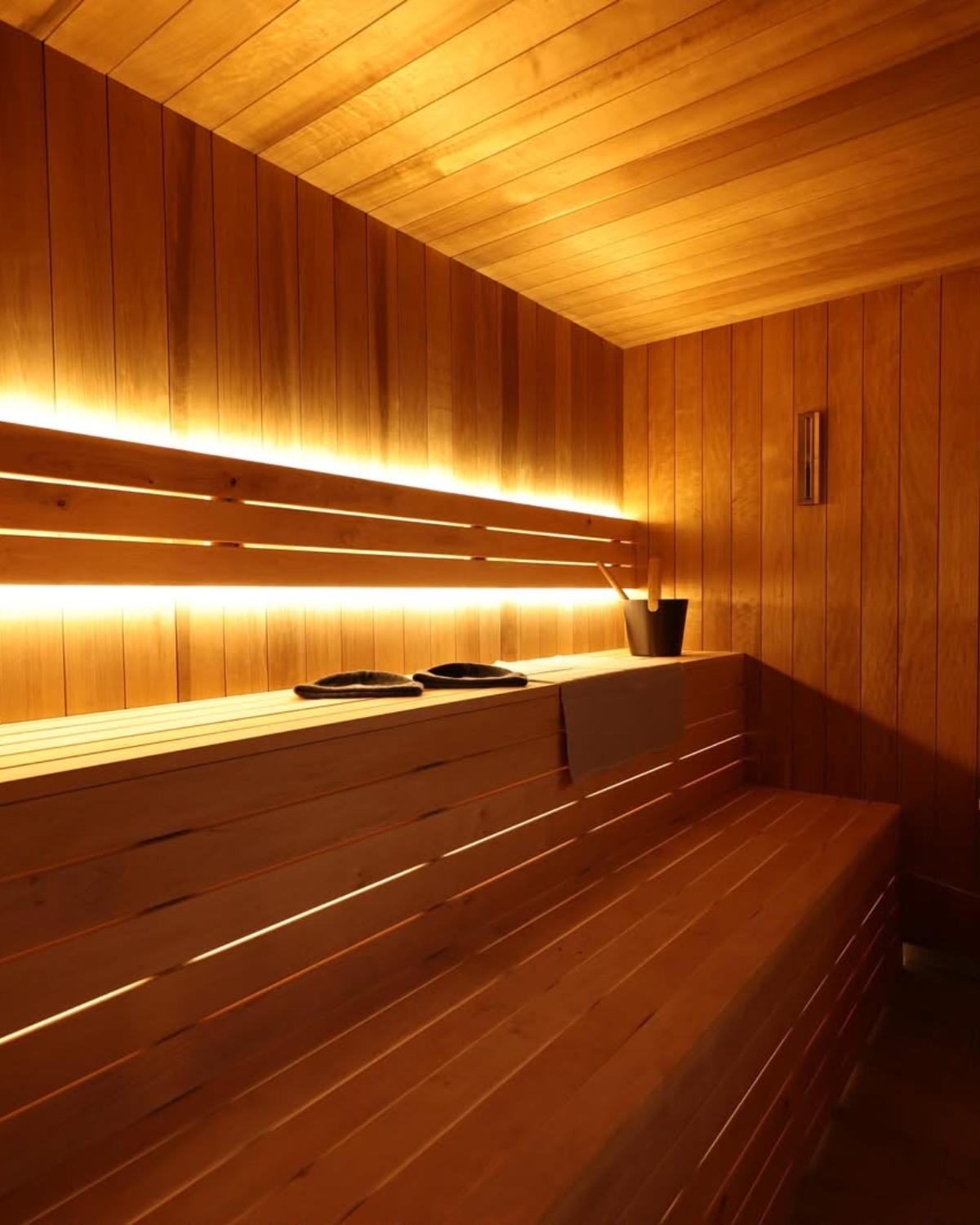
A sauna is a purpose-built room or cabin heated to high temperatures — typically 70–100°C — used for short, regular sessions of dry heat exposure. People use saunas to support cardiovascular health, ease muscle soreness, lower stress and improve sleep. At C11, we supply and install the Hekla range: outdoor Cube and Barrel saunas, and indoor Traditional cabins, all built from thermo-treated Nordic timber with Harvia heaters.
Sauna bathing has been part of daily life in Finland for centuries, but it’s the research from the last decade that’s made it one of the most credible wellness practices around — not just a trend, but a habit with some of the strongest long-term health data of any recovery tool available. This guide covers the type of sauna to choose, what the science actually shows, how to use one safely, and how to pick the right model for your space.
What Is a Sauna and How Does It Work?
A sauna works by raising your body’s core and skin temperature through exposure to hot air. Your heart rate increases, blood vessels dilate, and you sweat — a physiological response with real similarities to moderate-intensity exercise. As your body works to cool itself down, circulation improves and your cardiovascular system gets a genuine, gentle workout.
Traditional vs Infrared Sauna: What’s the Difference?
- Traditional sauna — heats the air in the cabin, typically to 70–100°C, using an electric or wood-burning stove and a bed of stones. Pouring water over the stones creates löyly, the steam that defines the classic Finnish sauna experience. This is the type C11’s Cube, Barrel and Traditional ranges are built around.
- Infrared sauna — uses infrared panels to heat the body directly at lower air temperatures (typically 45–65°C), without steam.
It’s worth being precise here: the strongest, longest-running research on sauna and cardiovascular health comes from traditional, dry-heat Finnish saunas. Infrared has a gentler profile and a smaller, though still positive, evidence base. If you’re choosing based on the research, traditional is the better-studied option.
What Are the Health Benefits of Sauna Bathing?
Sauna research is unusually well-established for a wellness practice, built on large, long-running studies rather than small trials.
- Cardiovascular health — the Finnish Kuopio Ischemic Heart Disease Study, published in JAMA Internal Medicine (2015), followed over 2,000 middle-aged men and found that those using a sauna 2–3 times a week had a 27% reduction in cardiovascular mortality compared to once-a-week users, with 4–7 times a week associated with a 50% reduction.
- A 2018 review in Mayo Clinic Proceedings summarised sauna bathing’s association with reduced risk of cardiovascular disease, dementia and all-cause mortality.
- Muscle recovery — regular use is associated with reduced muscle soreness and improved recovery after training.
- Sleep quality — commonly reported to improve with consistent sauna use.
- Stress reduction — regular sessions are associated with lower cortisol and improved mood.
Is This Backed by Real Science, or Just Wellness Marketing?
It’s genuinely research-backed. Heat exposure in a sauna raises heart rate to roughly 120–150 beats per minute — comparable to a brisk walk or light jog — giving the cardiovascular system a real, measurable stimulus. The Kuopio study’s protective effects held up even after accounting for physical activity levels, socioeconomic status and existing cardiovascular risk factors, which is part of why sauna bathing is taken seriously in cardiovascular research, not just wellness circles.
Is Sauna Bathing Safe?
For most healthy adults, regular sauna use is safe and well-tolerated. As with any form of heat stress, a few groups should take extra care.
Speak to your doctor before starting if you:
- Have a cardiovascular condition or uncontrolled high or low blood pressure
- Are pregnant
- Take medication that affects hydration or heat regulation
General safety guidelines:
- Stay well hydrated before, during and after your session
- Avoid alcohol beforehand
- Exit immediately if you feel dizzy, nauseous or lightheaded
- Cool down gradually between rounds rather than jumping straight to intense cold
This is general information, not medical advice — if you have an underlying health condition, check with a healthcare professional before starting a regular sauna routine.
How Hot Should a Sauna Be, and How Long Should You Stay In?
Most traditional sauna sessions sit between 70°C and 100°C. As a rough guide:
- Beginners: 5–10 minutes per round, at the lower end of the temperature range
- Intermediate: 15–20 minutes per round, at 80–90°C
- Experienced users: 20–30 minutes per round, up to 100°C
A typical session follows a simple rhythm: heat, cool down, rest, repeat — usually 2–3 rounds in total.
How Often Should You Use a Sauna?
The Kuopio research points to a clear dose-response pattern: more frequent use, within reason, is associated with greater cardiovascular benefit.
- Beginners: 2–3 sessions per week, 5–10 minutes per round, building gradually
- Regular users: 3–4 sessions per week, 15–20 minutes per round
- Longevity-focused, experienced users: 4–7 sessions per week, 20–30 minutes per round — the frequency band most associated with the largest reduction in cardiovascular mortality in the research
As with any heat or cold therapy, consistency matters more than intensity. A shorter, more frequent routine you’ll actually keep up with outperforms an occasional long session.
Choosing the Right Sauna: Outdoor or Indoor, Which Model?
The right sauna depends on your space, household size and whether you’d rather keep it outside the house entirely. C11 supplies and installs the full Hekla range, built from thermo-treated Nordic timber:
- Cube 160 — 2–3 person outdoor cube sauna with a glass front, the most compact option in the outdoor range.
- Cube 210 — 4 person outdoor cube sauna, available with an electric Harvia Cilindro heater or a wood-burning Harvia Linear 18 for off-grid use.
- Barrel 210 — 4–6 person outdoor barrel sauna, the classic Nordic silhouette, also available electric or wood-fired.
- Traditional 160 — 2–3 person indoor sauna, quick-build, with a slim wall-mounted Harvia heater — a strong entry point for anyone testing the habit before committing to a larger space.
- Traditional 210 — 3–4 person indoor sauna, the mid-size option in the Traditional range.
- Traditional 210x — 4–5 person indoor sauna, the largest quick-build Traditional model.
Every model comes with a water bucket, ladle, hygrometer and thermometer, and a sauna timer as standard, and carries a 2-year warranty.
Electric or Wood-Fired: Which Heater Should You Choose?
Several models in the C11 range, including the Cube 210 and Barrel 210, can be heated either way:
- Electric (Harvia Cilindro or Harvia The Wall): one-touch convenience with precise digital temperature control and optional WiFi scheduling. Ready to bathe in around 30–45 minutes, with no fuel or flue to manage.
- Wood-fired (Harvia Linear 18): the traditional experience — the crackle and aroma of a real fire, with a deep, enveloping heat. Needs no power supply, making it ideal for off-grid gardens.
Both reach full bathing temperature. The choice comes down to convenience versus authenticity, not one being better than the other.
Can a Sauna Go Outdoors in Ireland Year-Round?
Yes. The Cube and Barrel ranges are built specifically for outdoor use, with thermo-treated timber, double-glazed glass fronts and shingled roofs designed to handle the garden through every season. A firm, level surface and the included foundation beams are all that’s needed for installation.
Frequently Asked Questions
What’s the difference between a traditional and an infrared sauna?
A traditional sauna heats the air using a stove and stones, typically reaching 70–100°C, and can produce steam (löyly). An infrared sauna heats the body directly at lower air temperatures, without steam. The strongest cardiovascular research is based on traditional saunas.
How often should I use a sauna?
Beginners should start with 2–3 sessions per week. Research points to greater cardiovascular benefit at higher frequencies, up to 4–7 sessions per week for experienced users.
How long should a sauna session last?
Beginners should start with 5–10 minutes per round. Regular users typically stay for 15–20 minutes, and experienced users up to 30 minutes, following a heat-cool-rest-repeat rhythm.
Is sauna bathing actually good for your heart?
Yes, based on strong evidence. The Finnish Kuopio study found that men using a sauna 4–7 times a week had a 50% reduction in cardiovascular mortality compared to once-a-week users, and this is supported by a 2018 review in Mayo Clinic Proceedings.
Is it safe to use a sauna every day?
For most healthy adults, frequent or daily use is safe when sessions stay within sensible time and temperature limits and hydration is maintained. Anyone with a cardiovascular condition, pregnancy, or relevant medication should check with a doctor first.
Can a sauna be installed outdoors in Ireland?
Yes. The Cube and Barrel ranges are purpose-built for outdoor, year-round use in Irish conditions, with thermo-treated timber and weatherproof glazing and roofing.
Should I choose an electric or wood-fired heater?
Electric heaters offer fast, precise, app-controlled heating with no fuel to manage. Wood-fired heaters give a traditional off-grid experience with no power supply required. Both reach full bathing temperature — the choice is about convenience versus authenticity.
Ready to Start Your Sauna Routine?
C11 supplies and installs the full Hekla sauna range across Ireland — from the compact Traditional 160 to the outdoor Cube and Barrel ranges. Browse our saunas or get in touch for advice on which model fits your space and goals.