
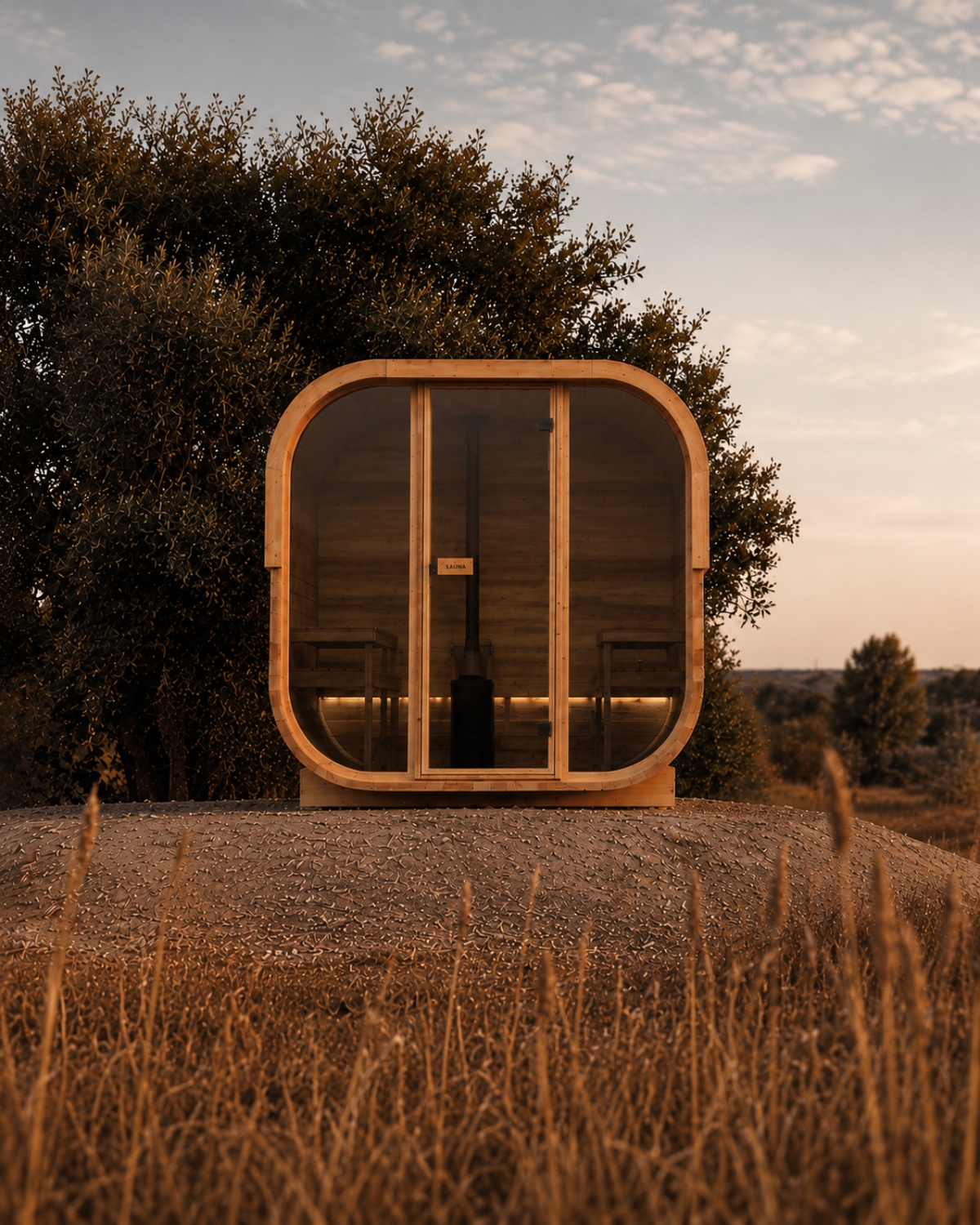
Most people who hesitate over buying a sauna aren’t comparing it to anything specific — they’re comparing it to nothing, mentally filing it as “money spent to sit in a hot room.” That’s the wrong comparison. The right one is against the other home wellness features people actually do spend on, like a hot tub or a pool, where a sauna usually comes out looking like the more sensible investment. Here’s the real cost, and what it buys you.
What Does a Sauna Actually Cost to Buy?
Across the C11 range, prices start from €5,830.00 for the Traditional 160, the smallest indoor model, and rise through the mid-size Traditional models to the outdoor builds — the Barrel 210 and the Cube 210, which starts at €9,520.00. Where you land in that range depends on capacity, whether you want an outdoor build, and your choice of heater.
For context, that starting price is genuinely modest compared to the other big home wellness purchases people commonly compare it to:
- A hot tub typically costs more to buy and substantially more to run, with ongoing chemical treatment, filter replacement and ozone or salt system maintenance.
- A swimming pool, even a small one, runs into tens of thousands once you include groundworks, heating and ongoing water treatment.
- A home gym renovation with quality equipment frequently exceeds sauna pricing before you’ve even considered the room itself.
A sauna isn’t free, but against the wellness investments it actually gets compared to in practice, it’s one of the more accessible options.
What Does a Sauna Cost to Run?
This is where the “wasted money” fear usually comes from, and it’s largely overstated. Ongoing sauna costs break down into three areas:
Electricity
Electric heaters typically reach full bathing temperature in 30–45 minutes and then hold that temperature efficiently. Running costs depend on heater size and how often you use it, but a sauna used a few times a week is a modest addition to a household electricity bill — nowhere near the continuous running cost of a heated pool or a hot tub kept at temperature around the clock.
Maintenance
A wood sauna cabin needs relatively little upkeep: occasional care of the timber, keeping the heater’s stones topped up and replaced periodically, and standard electrical safety checks. There’s no daily water chemistry to manage, no filters to clean weekly, and no chemicals to buy and store, unlike a hot tub.
Wood (if wood-fired)
Models like the Cube 210 and Barrel 210 can run on a wood-burning heater instead of electric. This trades an electricity cost for a fuel cost, and appeals to buyers who don’t have convenient power access in the garden or who simply prefer the ritual of a real fire.
Sauna vs Hot Tub: The Comparison Worth Making
Since a hot tub is the most common alternative buyers actually consider, it’s worth putting the two side by side:
| Sauna | Hot Tub | |
|---|---|---|
| Typical starting price | From €5,830.00 | Often higher, especially for quality models |
| Water/chemical maintenance | None | Regular, ongoing (chemicals, filters, water changes) |
| Running cost | Electricity (or wood) only, moderate | Continuous heating plus chemical treatment |
| Health evidence base | Strong, large-scale research (see our sauna health benefits guide) | Less extensively researched for the same outcomes |
| Typical lifespan | Long, with a durable timber structure | Shorter, with more wearing mechanical parts |
This isn’t to say a hot tub is a bad purchase — it’s a different kind of product for a different kind of use. But if a sauna is being mentally weighed against a hot tub rather than against nothing, it tends to come out ahead on both purchase price and ongoing cost.
The Real Question: Will You Actually Use It?
Cost only tells half the story. The most common regret among sauna buyers isn’t overspending on the unit itself — it’s buying a bigger, more expensive model than they needed before confirming they’d actually use it regularly. A sauna that gets used three or four times a week is excellent value at any of the price points above. A sauna that sits unused after the first few months isn’t, regardless of what it cost.
This is exactly why starting with a smaller, more affordable model like the Traditional 160 makes sense for first-time buyers — it lets you build the habit and confirm it fits your routine before committing to a larger outdoor Cube or Barrel installation.
Does a Sauna Add Value to Your Home?
Beyond personal use, a well-installed outdoor sauna can be a genuine point of interest for buyers in a home sale, particularly in a market where wellness features are increasingly desirable. It’s not typically the deciding factor in a sale on its own, but a properly maintained, good-quality sauna is far more likely to be seen as a bonus than as clutter to remove — especially outdoor models like the Cube and Barrel ranges, which don’t take up interior living space.
Frequently Asked Questions
How much does a home sauna cost in Ireland?
Across the C11 range, prices start from €5,830.00 for the Traditional 160 and rise to €11,550 for the largest outdoor models, such as a wood-fired Cube 210 — depending on size, setting and heater choice.
Is a sauna cheaper to run than a hot tub?
Generally, yes. A sauna’s running cost is mainly electricity (or wood, for wood-fired models), with no ongoing water chemistry to manage. A hot tub requires continuous heating plus regular chemical treatment and filter replacement.
Does a sauna need a lot of maintenance?
No. Compared to a hot tub, a sauna needs relatively little upkeep — occasional timber care, periodic replacement of heater stones, and standard electrical safety checks, with no daily water chemistry involved.
Is a wood-fired sauna cheaper to run than electric?
It depends on your access to and cost of wood versus electricity. Wood-fired heaters appeal most to buyers without convenient garden power access, or who prefer the traditional ritual of a real fire.
Does a sauna increase home value?
A well-installed sauna, particularly an outdoor model, can be a genuine selling point in a wellness-focused market, though it’s rarely the sole deciding factor in a sale. Outdoor models have an advantage since they don’t use interior square footage.
What’s the biggest mistake people make when buying a sauna?
Buying a larger, more expensive model before confirming they’ll actually use it regularly. Starting with a smaller model like the Traditional 160 is a sensible way to build the habit first.
Ready to Find the Right Fit for Your Budget?
C11 supplies and installs the full Hekla sauna range across Ireland, starting from €5,830.00. Browse the range or get in touch and we’ll help you find the right model for your space and budget.