Cold water immersion is standard practice in elite soccer, but for a long time most of the evidence behind it was borrowed from other sports rather than tested on soccer’s specific demands. That’s changed. A 2026 systematic review pooled ten randomised controlled trials on trained soccer players specifically, and the picture it gives is genuinely useful — and more honest than the usual claims. Here’s what it actually shows.
Ninety minutes of soccer produces a distinctive fatigue profile. Players cover 10–13km per match, including 2–3km of high-intensity running involving repeated sprints, sharp decelerations, changes of direction and jumping — with few substitutions and a large playing area to cover. Research describes this as generating both central fatigue (a reduced ability of the nervous system to fully activate muscles) and peripheral fatigue (biochemical changes within the muscle tissue itself), and critically, both can persist for up to 72 hours after a match.
That 72-hour window matters enormously during a congested fixture period, where matches every three or four days are common at both club and representative level. Fatigue that hasn’t fully resolved from one match compounds into the next, raising injury risk and eroding performance if recovery isn’t managed properly.
The systematic review and meta-analysis published in the Scandinavian Journal of Medicine & Science in Sports in 2026 isolated soccer rather than assuming findings from other sports would transfer. Pooling ten randomised controlled trials on male and female players after real and simulated matches, it found:
On protocol, the review noted that most of the included studies followed the established guideline of 10–15°C for 10–15 minutes, and that variation within that range didn’t change the findings. You don’t need to go colder or longer to get the benefit.
That lines up with individual studies on soccer players directly. A randomised study in Frontiers in Physiology compared 10 minutes of cold water immersion at 10°C against a thermoneutral 28°C sham immersion after a simulated 90-minute match. Voluntary activation — the central fatigue measure — dropped far less in the cold group and was back to baseline within 24 hours, against 48 hours for the sham. Peripheral fatigue recovered fully within 24 hours in the cold group, while the sham group still hadn’t fully recovered at 72 hours.
Good sports science reporting means representing the full picture, not just the results that support a product. Two things are worth saying plainly.
First, the meta-analysis authors added their own caveat: the 95% prediction intervals for every outcome included the null effect. In plain terms, that means future studies could find smaller benefits, or none. The pooled result is real, but the evidence isn’t settled.
Second, cold water immersion is not a general performance enhancer. The same review found no meaningful sprint benefit, and the jump benefit appeared at only one timepoint. Individual response also varies — water temperature, duration, frequency and the individual all matter.
The balanced reading is this: cold water immersion is well-supported for recovering muscle strength and reducing muscle damage markers and soreness in the 24–72 hour window that matters most during congested fixtures. It is not a guarantee of a better performance in every measured outcome, and consistency of use matters more than any single session.
Research examining multiple cold water immersions across a pre-season block in under-20 male soccer players looked at exactly this question — repeated, near-daily use rather than a single post-match session. It reinforces a pattern seen across contact and endurance sports alike, and matches the meta-analysis finding that creatine kinase reductions held consistently across timepoints: the real value of cold water immersion shows up with sustained, regular use through a demanding period, not as an occasional tool reached for only after the hardest matches.
Heat therapy plays a complementary, rather than competing, role. Cold water immersion is the more extensively studied modality for soccer, but regular sauna use supports general circulation, muscle recovery and — critically for players managing a congested fixture list — sleep quality, which is itself a major factor in how well players recover between matches. Pairing the two as contrast therapy is increasingly common in team sport for that reason.
| What to do | Why | |
|---|---|---|
| Within a few hours of a match, especially in a congested fixture run | Cold water immersion at 10–15°C for 10–15 minutes | The dose the soccer research actually used — supports recovery of both central and peripheral fatigue, and colder or longer adds nothing |
| Across a pre-season or heavy training block | Consistent, near-daily use rather than occasional | The benefit builds with sustained application; a session after the toughest match only is the weakest version of this |
| On lighter training days | Sauna use | Supports circulation, general recovery and sleep quality, complementing rather than replacing the cold |
| Throughout | Prioritise consistency over intensity | The evidence base is strongest for regular, moderate use, not dramatic occasional sessions |
Our beginner ice bath routine covers how to build up to that safely.
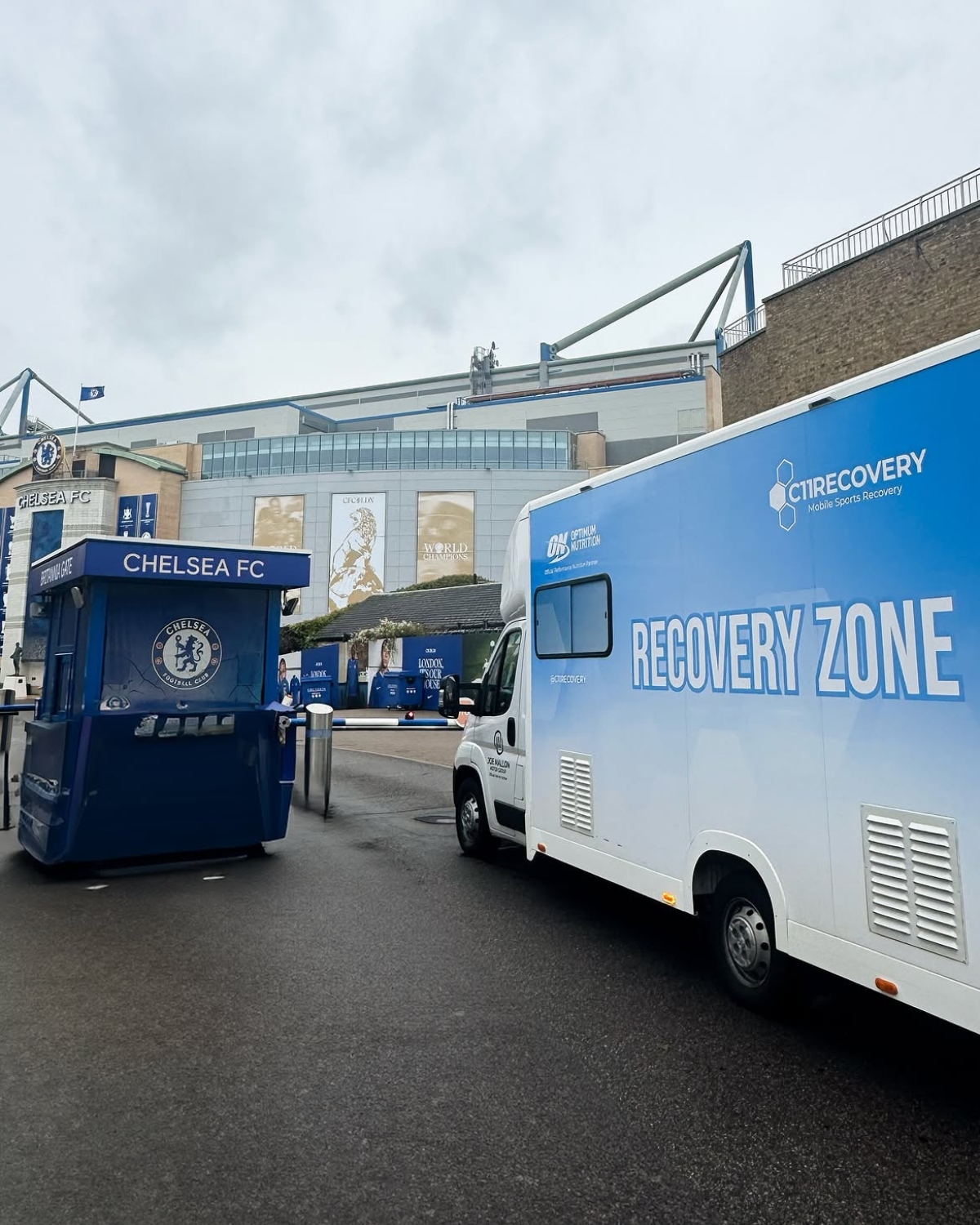
The soccer-specific research is clear on one point above all: consistency drives the benefit. That’s hard to achieve if recovery depends on travelling to a facility after every match or training session. C11 supplies and installs both the Avantopool cold plunge range and the Hekla sauna range, and offers mobile recovery sessions directly at training grounds and matches — making the kind of consistent, evidence-supported routine that elite soccer already treats as standard realistic for clubs and individual players too. We cover the same ground for Gaelic games and rugby players.
Yes, based on a growing body of soccer-specific research. A 2026 systematic review in the Scandinavian Journal of Medicine & Science in Sports pooling ten randomised trials found cold water immersion improved recovery of muscle strength at 24, 48 and 72 hours, reduced creatine kinase across all timepoints, and reduced muscle soreness. It found no meaningful sprint benefit.
Soccer-specific studies have commonly used 10–15°C for 10–15 minutes, and the meta-analysis found variation within that range didn’t change the results. Going colder or staying longer isn’t supported.
No, and it’s worth being honest about that. The same meta-analysis found no meaningful sprint benefit, a jump benefit at only one timepoint, and noted that the prediction intervals for every outcome included the possibility of no effect. Individual response to cold exposure also varies.
Research on repeated use during pre-season training blocks shows benefit builds with consistent, near-daily application rather than occasional use only after the toughest matches.
Research shows both central and peripheral fatigue from a soccer match can persist for up to 72 hours. During congested fixture periods with matches every three or four days, incomplete recovery compounds match after match, raising injury risk.
Sauna plays a complementary role, supporting circulation, general recovery and sleep quality, which matters significantly during a demanding fixture schedule. It’s a useful addition alongside cold water immersion rather than a replacement for it.
Through a congested fixture run, the hard part is not knowing what to do — it is doing it consistently. C11’s mobile recovery room brings the cold plunges and sauna to your ground, so recovery happens straight after the match instead of whenever someone can next get to a facility. Check availability for your squad, a tournament or a pre-season block.
For a permanent setup at the club or at home, we also supply and install the full Avantopool cold plunge and Hekla sauna ranges across Ireland. Get in touch and we will work out what fits your space and your budget.
Our mobile recovery room brings professional hot-and-cold recovery directly to your team or event. Sports clubs, competitions, corporate days and wellness activations, anywhere in Ireland.

So we can show you the right prices and delivery options.
All prices include VAT. You can change this any time.