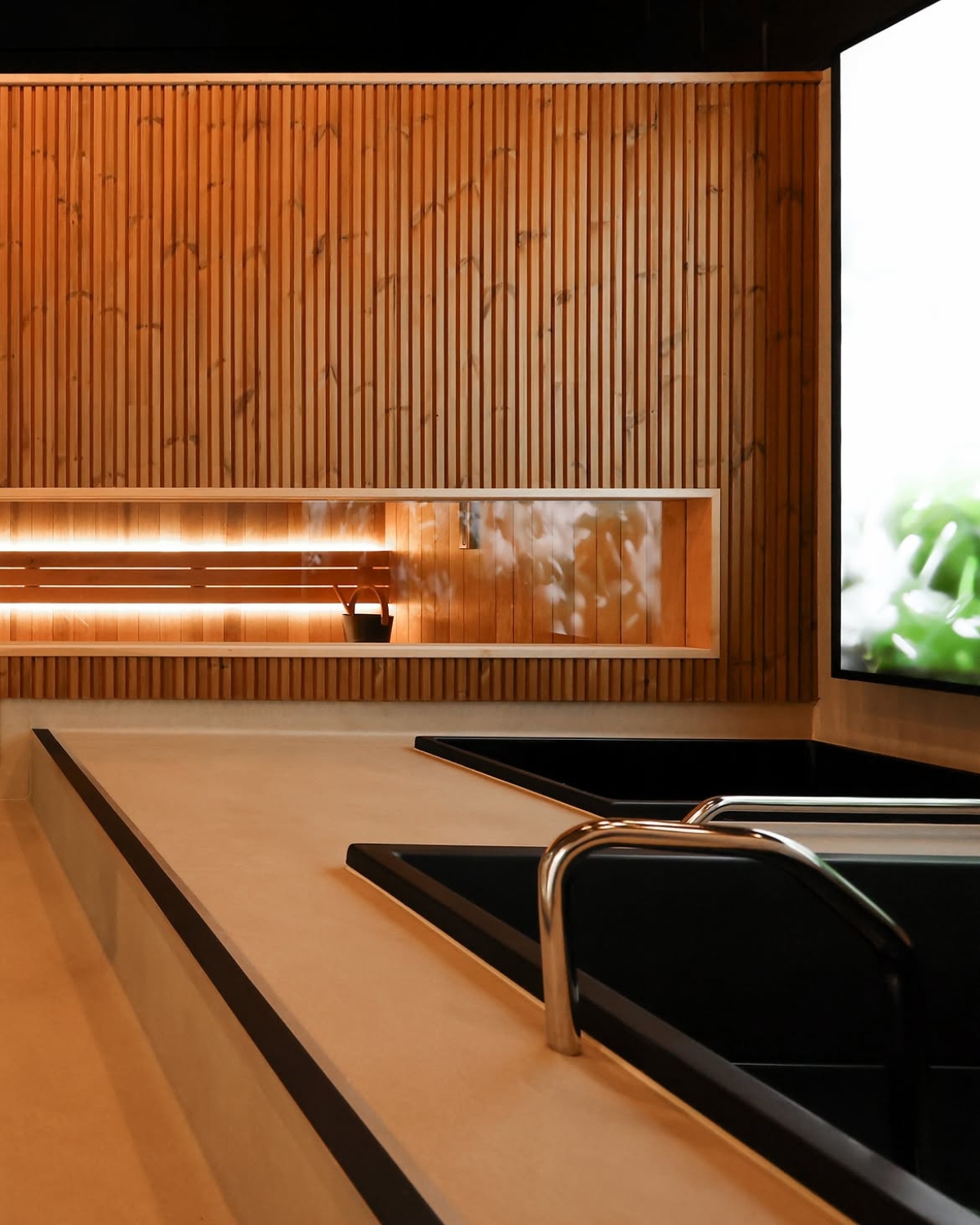
Sauna heat and cold water immersion each have a genuine, research-backed case on their own. Put them together in the same session — heat, then cold, in structured rounds — and you get something researchers call contrast therapy, which produces effects that go beyond what either one delivers alone. This is also, not coincidentally, the combination that shows up again and again in C11’s own customer reviews, where people who came in for one ended up using both. Here’s why that pairing works, and how to do it properly.
Contrast therapy is the deliberate alternation between heat exposure and cold exposure within a single session — typically several minutes in the sauna, followed by a short cold plunge, repeated for 2–4 rounds. It has roots stretching back centuries in Nordic bathing culture, where sauna sessions were traditionally followed by a plunge into cold water or snow. What’s changed is that modern research now explains the specific physiological mechanisms behind why the combination works so well.
The core of contrast therapy is vascular. Heat causes your blood vessels to dilate, pushing warm blood toward the skin and increasing circulation. Cold does the opposite, causing rapid vasoconstriction. Alternating between the two creates what’s sometimes called a vascular pump effect — blood is repeatedly pushed out to the extremities and drawn back toward the core, which appears to more effectively clear metabolic waste products from tissue than either heat or cold sustained on its own.
Each phase also triggers its own distinct response:
Together, these two distinct pathways are what researchers mean when they describe the effect as more than additive — genuinely different from doing a longer sauna session or a longer cold plunge on their own.
One important, honest caveat: a 2025 meta-analysis in PLOS ONE found that cold water immersion doesn’t necessarily reduce inflammation immediately — inflammatory markers actually rose in the first hour after immersion before more favourable effects appeared later. The takeaway isn’t that cold “doesn’t work,” but that the benefit comes from how your body adapts over repeated sessions, not from an instant effect in any single one.
This is one of the most consistent findings across contrast therapy research: sauna first, cold plunge second, not the other way around.
Heat prepares your vascular system by dilating blood vessels and allowing deeper tissue perfusion. Following that with cold immersion creates the vascular pump effect described above. Starting with cold instead causes immediate vasoconstriction before your tissue has had the chance to properly warm and dilate, which reduces the contrast effect you’re aiming for.
| Beginner | Established routine | |
|---|---|---|
| Sauna | 10–15 minutes | 15–20 minutes |
| Cold plunge | 1–2 minutes | 2–3 minutes |
| Rounds | 2 | 2–3 |
| Finish on | Cold | Cold |
Research generally supports 2–5 minutes per cold immersion round, at 10–15°C, as sufficient to trigger the key physiological responses without adding unnecessary risk. More rounds isn’t automatically better — 2–4 total rounds captures the benefit without pushing into diminishing returns or unnecessary strain.
Combining two forms of physiological stress in one session means safety matters even more than when doing either alone.
The practical appeal of contrast therapy is that it doesn’t require a spa membership — a sauna and a cold plunge installed together at home (or side by side in a gym or clinic setting) makes the full protocol available whenever you want it, rather than dependent on a facility’s opening hours. This is exactly the setup C11 specialises in: pairing a Hekla sauna with an Avantopool cold plunge, installed together as a single recovery space.
Sauna first, then cold. Heat dilates blood vessels and prepares tissue, and following that with cold immersion creates the vascular pump effect that drives the benefits of contrast therapy. Starting with cold reduces this effect.
A common approach is 10–20 minutes in the sauna followed by 1–3 minutes in the cold plunge, repeated for 2–4 rounds, finishing on cold.
Research suggests the combination produces effects beyond what either practice delivers on its own, largely due to the repeated vascular “pump” effect of alternating dilation and constriction, alongside the distinct heat shock protein and norepinephrine responses each phase triggers.
For most healthy adults, yes, when done with proper hydration and controlled breathing. Anyone with a cardiovascular condition, who is pregnant, or who takes medication affecting heat or fluid regulation should check with a doctor before combining heat and cold exposure specifically.
2–4 rounds is generally sufficient. More rounds isn’t necessarily better — the benefit comes from the repeated contrast, not from maximising total time in either the heat or the cold.
Yes, in the sense that the practice specifically relies on alternating between the two. C11 supplies and installs both a Hekla sauna and an Avantopool cold plunge, so they can be set up together as a single recovery space.
C11 supplies and installs both the Hekla sauna range and the Avantopool cold plunge range across Ireland, so you can build a proper contrast therapy setup at home. Browse saunas or browse cold plunges — or get in touch and we’ll help you plan a combined installation.
We supply and install the full Avantopool range across Ireland and the UK. Tell us about your space and we’ll recommend the right unit.

So we can show you the right prices and delivery options.
All prices include VAT. You can change this any time.