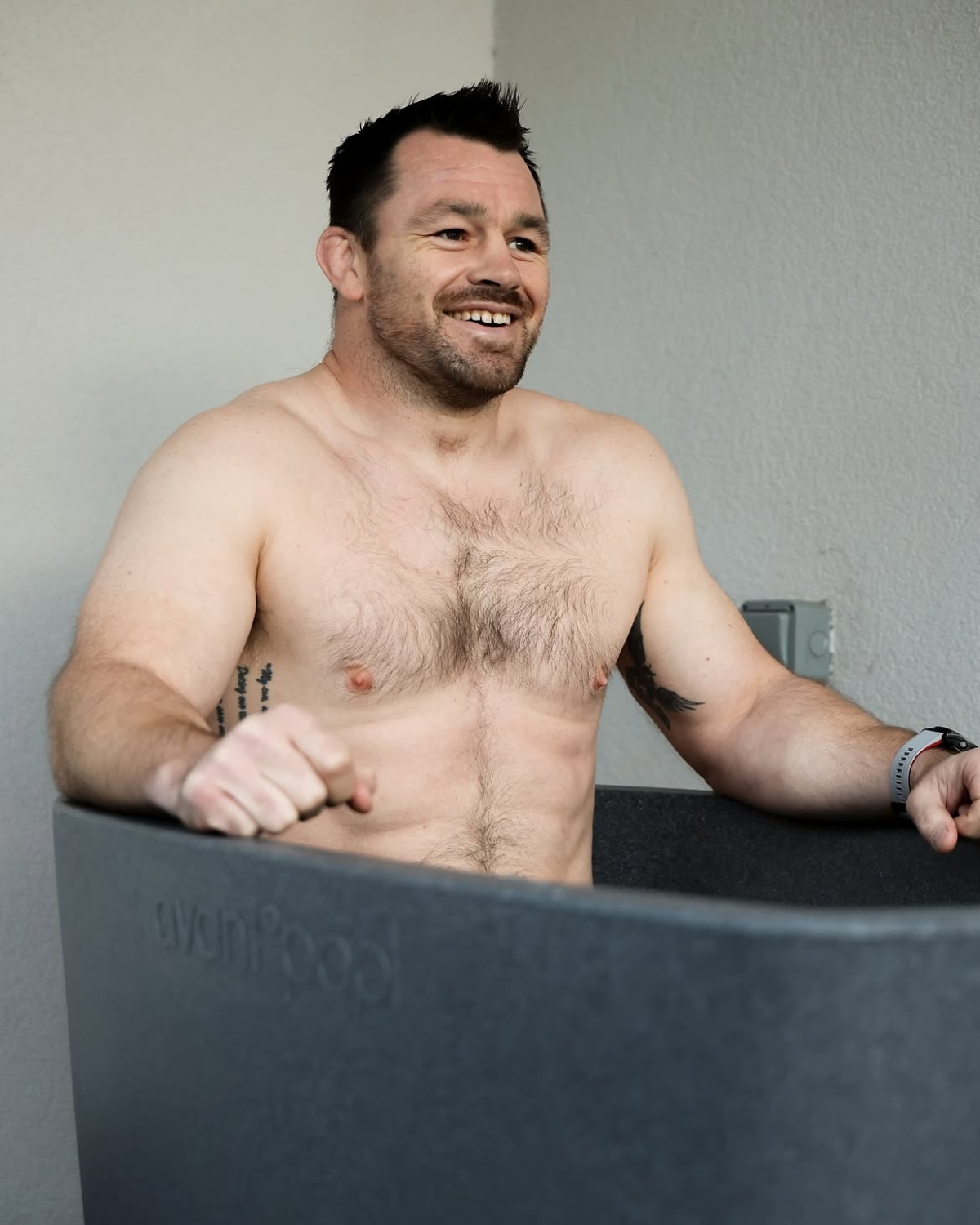
Rugby has more peer-reviewed research behind its use of cold water immersion than almost any other team sport — and for good reason. The combination of repeated high-intensity running and forceful, blunt-force collisions produces a specific, well-documented pattern of muscle damage that recovery science has studied directly, not by analogy from other sports. Here’s what the evidence actually shows, and how it applies to a real rugby training and match schedule.
Rugby union combines two distinct physical stressors in the same match: periods of intermittent, high-intensity running, and repeated forceful collisions from tackling. Research into rugby physiology describes this combination as producing substantial muscle damage beyond what either element would cause alone — and that damage has a measurable, ongoing impact on performance and recovery in the days that follow.
This matters practically because rugby’s typical weekly structure doesn’t leave much room for it. Training commonly resumes just 48 hours after a match, which research on rugby recovery notes may not give players sufficient time to fully recover naturally before the next physical demand arrives. This is exactly the gap that structured recovery strategies are designed to close.
Unlike many sports where cold water immersion (CWI) evidence is borrowed from other disciplines, rugby has its own dedicated body of research.
A controlled study published in Medicine & Science in Sports & Exercise had ten rugby athletes complete a simulated collision-sport protocol — two 30-minute bouts of intermittent sprint exercise with repeated tackling — followed by either a 20-minute cold water immersion or passive recovery. The results were clear: CWI led to faster recovery of maximal voluntary contraction (muscle strength), voluntary muscle activation and muscle contractile properties, along with reduced perceived muscle soreness, compared to passive recovery alone.
A separate study on elite rugby players looked at chronic use — immersion repeated through a three-week intensive training phase rather than after a single session — and found moderate reductions in fatigue and muscle soreness compared to a control group. The reductions in creatine kinase, a blood marker of muscle damage, come from the acute research on immersion within 48 hours of exercise rather than from this chronic protocol. Both matter for a rugby season; they answer slightly different questions.
Further rugby-specific work has examined repeated cold water immersion after a simulated rugby union protocol, published in the Journal of Strength and Conditioning Research, adding to a research base that is unusually deep for a single sport.
The consistent finding across this research is that cold water immersion is genuinely effective for the specific type of damage rugby causes — not vague general soreness, but the measurable loss of muscle force and impaired neuromuscular activation that follows repeated collisions and high-intensity running.
One honest caveat worth carrying: the effect on blood markers of muscle damage is less consistent than the effect on function and soreness. The Medicine & Science in Sports & Exercise study found no significant change in muscle damage markers even while muscle function and soreness both improved. In other words, cold water immersion speeds up how quickly you’re ready to perform again. It doesn’t prevent the damage from happening in the first place — and for a player facing training in 48 hours, being ready to perform is the thing that matters.
It’s also worth noting that the benefit shows up most clearly with repeated, consistent use across a training block or season, not as a one-off treatment reached for only after the toughest matches. This mirrors the broader pattern seen in cold water immersion research generally — the physiological adaptation compounds with regular practice.
Heat therapy plays a different, complementary role to cold water immersion in a rugby context. Rather than directly targeting the acute muscle damage from collisions, regular sauna use supports circulation, general muscle recovery and sleep quality — all relevant to a player managing the cumulative physical toll of a full season of training and matches. Pairing sauna with cold water immersion — contrast therapy — has become increasingly common in rugby recovery specifically because the alternating heat-and-cold cycle appears to support more effective clearance of the metabolic waste products linked to soreness than either practice alone.
| What to do | Why | |
|---|---|---|
| Within a few hours of a match or heavy contact session | Cold water immersion, around 10–15°C for roughly 10–20 minutes | Faster recovery of muscle strength and neuromuscular function, and less next-day soreness — which matters most on rugby’s 48-hour turnaround |
| On lighter training days or rest days | Sauna use | Supports circulation, eases accumulated tightness and helps sleep quality through a demanding block |
| Across a full season | Build both into the weekly routine rather than saving them for the toughest games | The chronic immersion research shows the benefit builds across a training block, not from one-off sessions |
Our beginner ice bath routine covers how to build up to those durations safely if you’re new to it.
Elite rugby clubs treat cold water immersion and sauna access as standard infrastructure, not an occasional luxury — and the research above is a large part of why. C11 supplies and installs both the Avantopool cold plunge range and the Hekla sauna range, and offers mobile recovery sessions directly at training grounds and matches, bringing the same evidence-based tools professional rugby uses to clubs and individual players who don’t have that infrastructure built in. We cover the same ground for Gaelic games players, who face a similar physical profile on a similar turnaround.
It’s genuinely research-backed, and specifically for rugby. Controlled studies on rugby athletes have found cold water immersion improves recovery of muscle strength, activation and contractile function and reduces perceived soreness following collision-sport activity. Its effect on blood markers of muscle damage is less consistent.
Rugby-specific research has used protocols around 10–15°C for roughly 10–20 minutes, showing meaningful improvements in muscle recovery markers compared to passive recovery.
Research on chronic, repeated cold water immersion in elite rugby players shows benefit builds with consistent use across a training block, not just as an occasional post-match treatment.
Rugby’s typical schedule often has players returning to training just 48 hours after a match, which research suggests may not allow full natural recovery. Structured recovery tools like cold water immersion are specifically useful for closing that gap.
Sauna plays a complementary role — supporting circulation, general recovery and sleep quality rather than directly targeting acute collision-related muscle damage the way cold water immersion does. Many rugby recovery routines use both together as contrast therapy.
Yes. C11 supplies and installs Avantopool cold plunges and Hekla saunas, and offers mobile recovery sessions at training grounds and matches for rugby clubs and individual players.
C11’s mobile recovery room brings professional hot-and-cold recovery straight to your club — pitchside after a match, or into a training block when the 48-hour turnaround leaves no room for anything else. Clubs, competitions, corporate events and wellness activations. Check availability for your squad.
For a permanent setup at the club or at home, we also supply and install the full Avantopool cold plunge and Hekla sauna ranges across Ireland. Get in touch and we will work out what fits your space and your budget.
Our mobile recovery room brings professional hot-and-cold recovery directly to your team or event. Sports clubs, competitions, corporate days and wellness activations, anywhere in Ireland.

So we can show you the right prices and delivery options.
All prices include VAT. You can change this any time.